The Mind of a Writer

To the outside world, writers can seem like an enigma. They pull plots and characters out of thin air. Creations that pull us into new worlds and exciting lives much different than our own. How can a person scribbling into a notebook or typing like a madman on a computer create these new worlds?  People have been doing it since we learned to write, but it can still be baffling to those lacking a writer’s brain. What is it like inside their heads? 

A writer’s brain is different from person to person, much like their writing process. Some writers have a fountain of ideas that they can pull out of their mind on a rainy day. Others have ideas pop into their heads rarely and at inconvenient moments. They have to scramble to get things down, otherwise it will flutter away on the wind. 

Despite the varying ways writers approach writing, the minds of writers are similar. Most people pulling characters out of thin air have brains full of little details. Details about the world and the people in it that they use to build characters. I’ve often found myself people-watching to figure out how people walk or speak to file away for later. Or I’ve taken a gazillion pictures of an area that I want to include in a story. Writers have a knack for observation. You never know, you may find a story idea in the color of a flower or an overheard conversation. 

Writing also calls for an ability to come up with tough situations for your characters to deal with. Some are familiar to the writer, while others are out there in a magical realm with no context. Some writers have an overthinking brain, which they can use in this situation. Writers with this type of brain can come up with worse case scenarios for anything. While it’s not great for everyday life, it can create compelling stories. It’s also helpful for those with writer’s block needing to up the ante on a story. If a writer can’t figure out all the details, Google is their BFF. It creates a weird search history, but helps get the job done. 

One of the most important things in a writer’s brain is empathy. Sure, creativity is up there, but compassion is key. Empathy helps a writer get inside the head of a character who is nothing like them. It’s hard to create someone who appears to be a fully-fledged human in the world of the story. With an understanding of those different to them, writer’s can create those characters. It’s more interesting to learn about characters who are different from their creator. Yet they still came out of that person’s mind. 

If you think about it, writing is weird, especially fiction writing. Pulling these things out of thin air takes a mind geared for the challenge. Across the genres, writers have to tap into a side of them that others might not use often. It’s how we’ve been able to visit our favorite worlds and meet the characters we love. Without a writer’s brain, weirdness and all, the world would be a boring place.


3 Ways Reading Improves Your Writing Skills

If you talk to a writer in the throes of their writing process, you’ll hear a similar thought: “writing is hard”. This is especially true when you’re kind of new to writing, like me. If it’s a writer with the cursed writer’s block, the feeling is tenfold. There are many different ways to help improve your writing skills. Among this list of ideas is one that some writers stay away from like it’s the plague; reading. 

Reading, believe it or not, can be a huge asset to your writing skills. This is a fact that most writers know well, but some still shake their heads at the idea. Reading novels, especially ones in the same genre that you’re writing, is a great way to hone your craft. Think about a book that you love the most in the genre. What do you like about it?  Why do you return to the novel over and over again? Considering these questions can help you improve three aspects of your story. 

1. Stronger Characters

Oftentimes our favorite stories give us examples of how to improve our characters. Reread the novel and consider a few things as you read. What are the strengths of these characters? What are their weaknesses? Are there traits that make them especially likable? If it’s a villain/antagonist, how do they challenge the protagonist? Also, how do all the characters add to the plot progression?

Keep a notebook or laptop beside you and take notes. Consider some of the questions I asked and any others that you feel are important. After you’ve compiled a list of these traits, think about how you can apply them to your novel. Make sure you’re not copying and pasting these characters into your own story. They are inspiration, not parts of a story to recycle. If I recycled traits from Poirot and created a similar Belgian sleuth, it would be obvious. Instead, use general descriptions of the characters you admire and adapt them to your own. Are you a fan of Sherlock Holmes? Instead of creating a carbon copy of the sleuth, hone in on what makes you like him. If it’s his observation skills, use that to create a character with sharp skills in a different way. They could be a smart socialite who can read people from their years of training. Or, they could be a dedicated Doctor who spends hours studying their patients to be the best Doctor they can. 

In some genres it can be hard to take inspiration without people noticing, like the mystery genre. If you have an observant person solving a case, people are going to think of Holmes. Make sure you add other traits to your characters to make them more than a carbon copy.  

2. Honed Writing Style

Deciding on a writing style can be a tricky task. You have to consider the genre, the story, the characters, and what you want to say with your story. This is when consulting books in the same genre is a must. When reading them, pay attention to their style. Are they witty? Is the writing painting a vivid world, or one left up to the reader’s imagination? What kind of words and sentence structure do they use? Is it more light-hearted or serious?

Get that notebook or laptop out again and keep the notes flowing. Jot down some keywords to describe the writing styles you gravitate towards. Do this for stories within and outside the genre you’re writing. Use these words to find the commonalities. If you find the witty and punchy style of Terry Pratchett up your alley, think about why. How can you adapt it to help improve your style? I find it also helps to read the novel that inspires you right before writing. If you have the style and vibe fresh in your mind, it’s way easier to channel it in your own story. Make sure you’re not copying, instead use that style to pull a similar vibe out of your own writing skills. 

3.  Well-formed Plots

Plotting has always been the bane of my existence. I can jump around and write scenes, but putting them into a coherent plot is another story. When I’m lost I look to stories within the genre that I want to write. If you experience a similar situation, ask yourself a few questions while reading. What plot structure are they using? How do they build the story so that the end makes sense? If it’s a mystery, how are they dropping hints to the readers? What about the story structure makes the climax impactful? 

As you’ve suspected, it’s time to take notes. Think about some of the questions I’ve asked, as well as any others you find important to your story. Also, pay attention to how the plot impacts the characters. A good plot has to include character growth! If you can get your hands on a book on plot structure, it’s also a great help. I read Save the Cat Write a Novel by Jessica Brody. It was a real lifesaver! Once you have all your notes complied, try plotting out your own novel. Writing key plot points on notecards and placing them on a wall is a great way to organize. If you want to challenge yourself, try using this method to visualize the plot of the novel you studied. Once you have it in front of you, take notes or pictures of the sections of the plot that you want to put into your own story. With these ideas at hand you can get off to the races!

How does reading improve your writing skills? Is there a novel that inspired you to write? Let me know in the comments below! I hope that you can apply some of this advice to your own stories in the future. Good luck with your writing, and happy reading!

4 Fun Writing Activities to Pass the Time

The past few months have been a crazy time for the world. With the quick spread of COVID-19, many are taking to self-isolation to slow it down. I have been under self-isolation for a little over a week. Working from home has been nice in some ways. I don’t have to put on makeup, my alarm goes off later, and I am steps away from all the snacks. But like most, I am feeling the side effects of being in one place by myself. I’ve found myself refreshing social media every ten minutes, hoping for something new. Despite the endless fountain of content, I’ve been stuck on mindless YouTube.

Today I decided that I needed to use this extra time to my benefit. I will take the time to work on crafts I haven’t touched in months, to watch new things I’ve been meaning to check out. Podcast marathons? Yes, please! One of the most important crafts that I want to focus on is my writing. Writing is something that both stimulates the mind and helps pass the time. In an attempt to help myself focus on writing and preventing my mind from turning to mush, I have made a list. A list that I thought might help my fellow writers keep their craft going. If you need some inspiration, these four ideas might help you get the creative juices flowing!

1. Writing Prompts

As most writers know, writing prompts are a great way to get yourself into the writing groove. They allow you to exercise your creativity and explore new story ideas. If you feel stumped by a story you’re working on, writing prompts are a great way to refocus your mind. They’re also full of intriguing situations that are fun to write about!

There are many ways to find writing prompts. You can find books full of prompts on Amazon. Writing Prompts on Tumblr and Instagram is another great source for prompts. They also post responses sometimes, which is a great way to get inspiration from others. Also, some sites offer writing prompt generators. It keeps you on your toes and might even give you a great story idea!

2. NaNoWriMo but in March!

Looking for a challenge to keep your writing mind sharp? Try doing a mini version of NaNoWriMo! NaNoWriMo stands for National Novel Writing Month. NaNoWriMo challenges writers to write a novel in November. There are many of us who don’t know how long they will be social distancing, so a month challenge won’t work. Try doing a two-week version, focusing on a story idea you want to flesh out. Challenge yourself to write around 1,500 words a day if possible. 

There are countless ways to enter the NaNoWriMo challenge that you can adapt to the mini version. If you did the November challenge last year, you can take this time to edit and expand your current story. Or, you can go in with nothing at all. Use this mini-challenge to build characters, worlds, or form new ideas. It’s surprising how much writing you can get done in two weeks! If you want to learn more about NaNoWriMo, you can check it out here.

3. Write about what’s around you

People always say to write what you know. You can take that advice and use it to describe the world around you. This is a great exercise to help improve your descriptions in writing. Try focusing on one side of the room or section of your backyard. Include more description than you think necessary. Or, if you need to work on character descriptions, focus on people or pets in your house.

This exercise is also a sneaky way to get you out into nature. As long as you are social distancing, visiting nature great for both your writing skills and mind. Nature often has a multitude of colors, textures, and sounds. It’s a gold mine for writers!   Smell the flowers! Listen to the birds chirping. Take a notebook with you and jot down words and phrases to describe them. You can also take pictures on a walk and describe the objects you captured. Taking a few minutes to observe nature will also be a nice break for your brain.

4. Collaborate with other writers online!

Writing doesn’t have to be a solitary practice. If you have fellow writing friends, try hosting a Zoom writing party. You can talk about story ideas, read sections for editing, and have a great time! Try creating a theme for each online hangout. One might be all about worldbuilding. During another, you could talk about building characters in fun ways. You can also do the other things on this list with other writers online. 

If you don’t have friends who are fellow writers, try searching around the internet. Many writing forums are already created on Reddit, Tumblr, NaNoWriMo, and more. Make sure you do your research before joining an online forum. What are they talking about? Do the people meld well with your personality? Are you comfortable sharing personal information or writing with the group? Like in-person groups, these are important questions to ask yourself before joining. If you are positive that this group is for you, a fun future awaits you!

What are you doing to keep your writing brain active during this time of self-isolation? What other ways have you coped with the long days? Let me know in the comments below! I hope that this post has given you some groundwork for good ways to spend your self-isolation. This is a crazy time for the world right now. For many of us, the best thing we can do is self-isolate to prevent the spread. During this time, you’ll get bored and miss some aspects of daily life missing due to closures. But this is the right thing to do. Call a friend. Play a board game. Have a writing party with your friends online. We’ll beat this, and soon will be enjoying the lovely sunshine with our friends and family close to us. Happy writing and stay healthy!

Five GIFs for That Perfectly Show the Writing Process

The time has come for you to begin your writing mission. You sit down at the computer or notebook, crack your knuckles, and attempt to start. The process that follows contains hurdles, plot bunnies, and the occasional eureka moment. If you can manage to reach the end, you win the reward of writing that you are actually proud to share. Until then, you’re stuck in the Groundhog Day loop known as writing. The process is a bit different, but in the end, the similarities stand out. And like most situations, there’s a GIF for that…or five.

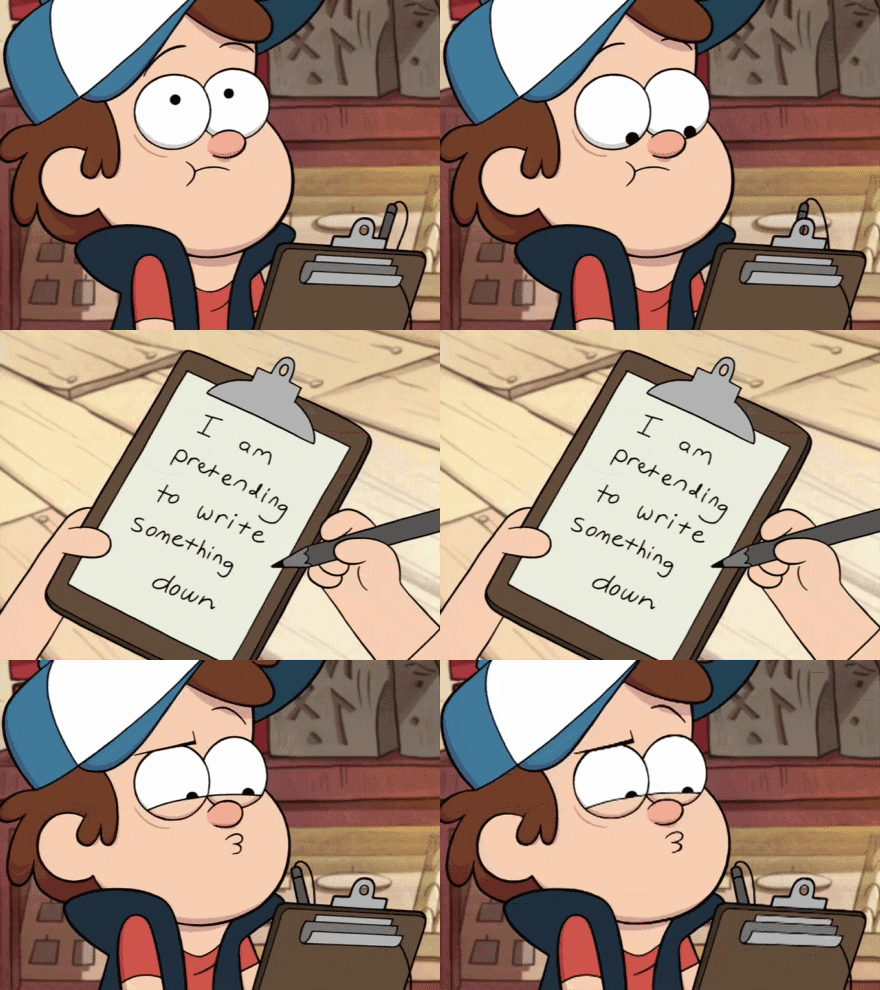
  1. When you’re trying to convince someone that you’re actually getting work done but you’re blocked.

Via Giphy

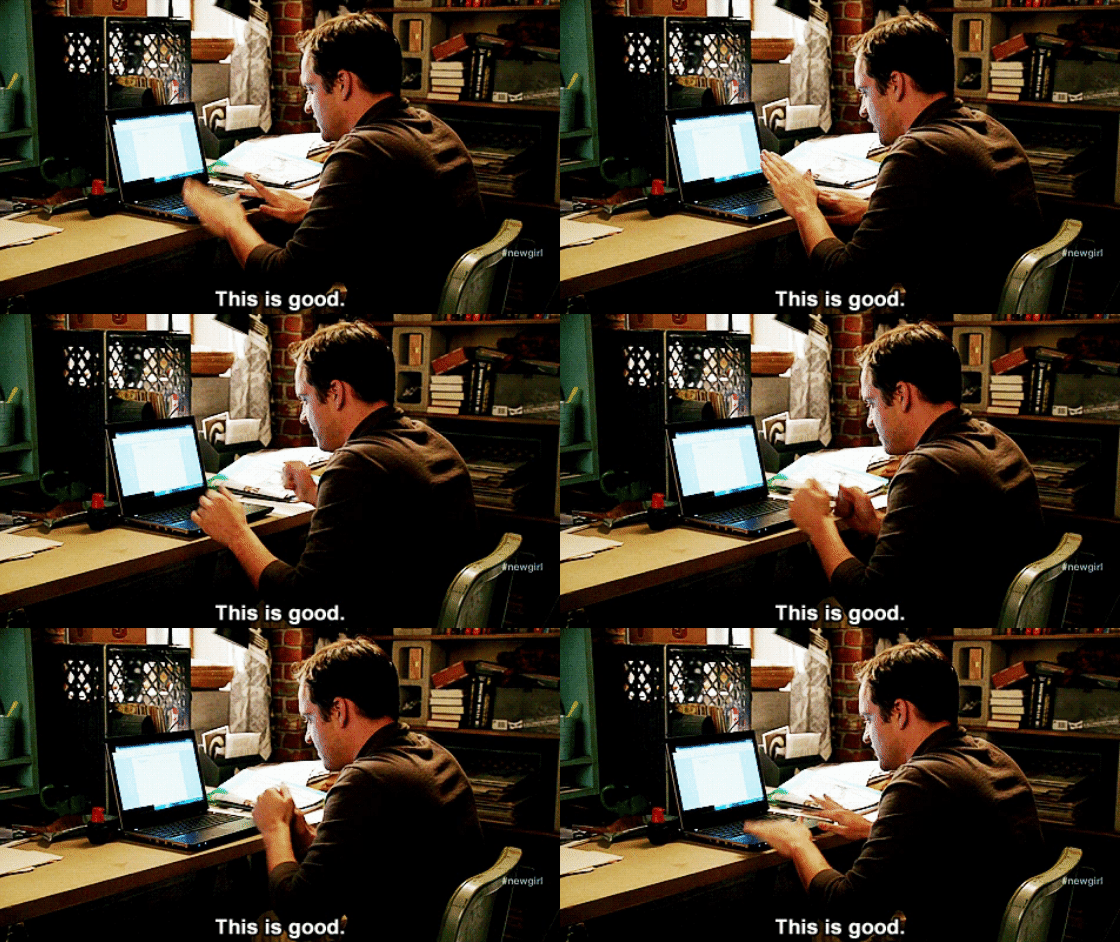
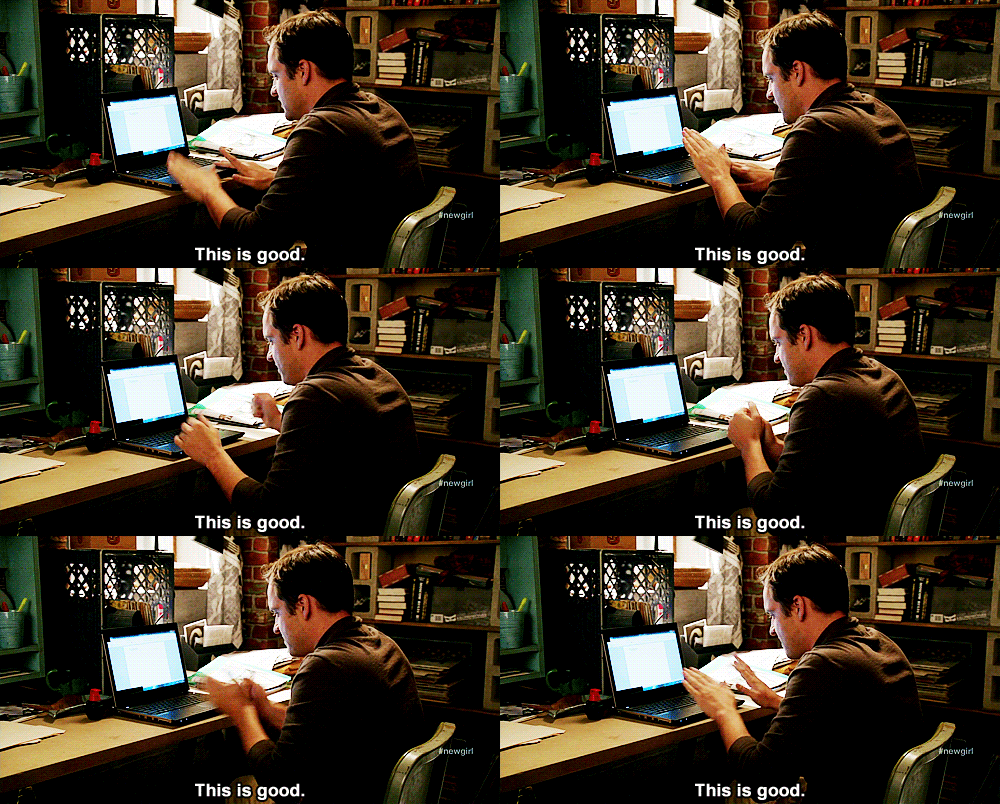
  1. When you’re word-vomiting and the dialogue isn’t a disaster.

Via Giphy

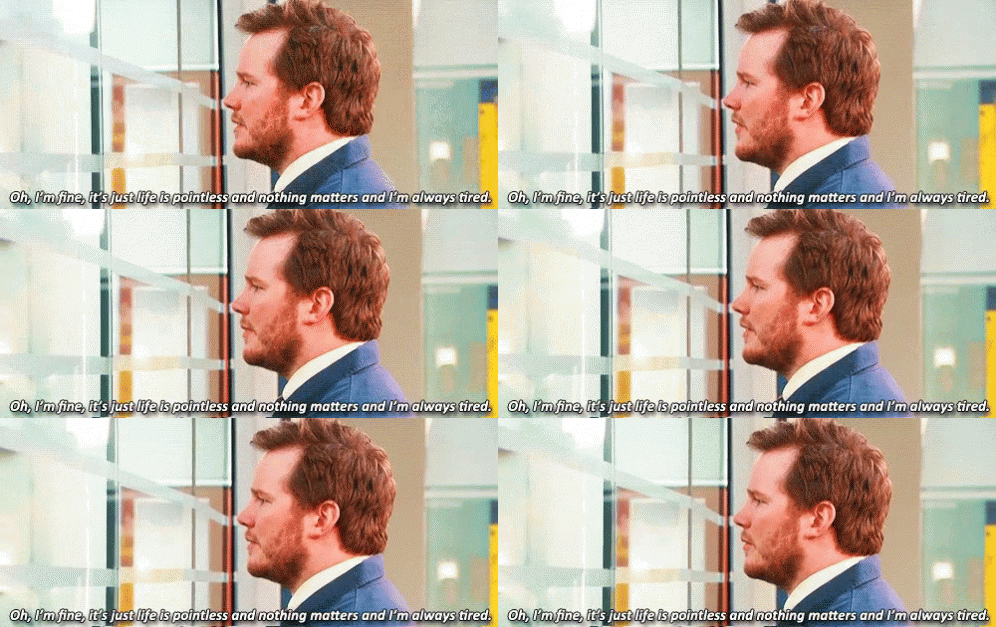
  1. When you reread your draft and everything sounds terrible.

Via Giphy

  1. Discovering that your story line actually works and is interesting.

Via Giphy

5.  When you hit your writing goal for the day.

Via Giphy

What are some GIFs that you think show the writing process? Let me know in the comments below! GIF threads are the best. Good luck to all the writers out there in the throngs of the writing process. You’ve got this!