10 GIFS That Perfectly Represent NaNoWriMo

Welcome to another week of writing and stress! This week has been an eventual one. Thanks to that, I have no interesting NaNoWriMo updates for y’all. I had a feeling that reading another post about a girl’s stress during this year wouldn’t be very helpful. I didn’t do any writing this week, so it seemed silly to blab for a few paragraphs about my lack of writing. Instead, I’ve decided to highlight some relatable moments of taking part in NaNoWriMo. What better way to highlight these moments than my favorite medium, GIFs! 

  1. When you first sit down for a writing session
  1. When you get a breakthrough on a story idea.
  1. When you’re cheering on your writing buddy and their awesome work.
  1. After someone asks how your writing is going during a rough patch.
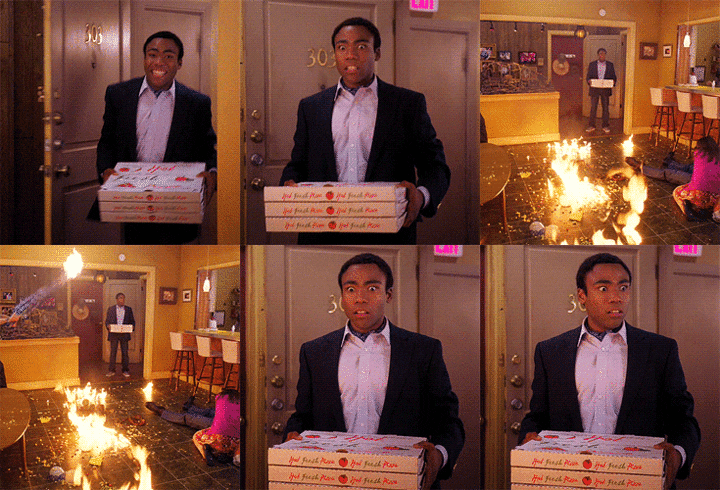
  1. When you roll into your local chat to check up on your writing friends and accidentally walk into peak chaos. 
  1. Cheering on the writers who have completed NaNoWriMo.
  1. When someone asks you to give more details on your story idea. Details who? We don’t know her
  1. Me trying to get through this while doing work and holiday stuff.
  1. When the writer’s block hits you hard.
  1. After finally completing this crazy month.

I’m sure I’m not the only one who feels that last gif deeply. If we all play our cards right, our food comas can line up perfectly with our post NaNoWriMo naps. Don’t forget my fellow WriMos, we’re halfway there! So exciting. Whether you’re chugging along or have barely scratched the surface, taking part in this is still a great thing. You’re powering through the craziness to put words on a page, and I think that’s pretty awesome. Good luck with this next week of NaNoWriMo and happy writing to everyone!

NaNoWriMo: A Stressful Week 1

Welcome back to another recap of my NaNoWriMo journey! As most Americans could tell you, this past week has been stressful. This entire week has been as draining as it has been exciting. For the past week, I’ve gotten home from work and attempted to stay as far away from the news and social media as I could. I tried to limit checking for updates and searched for something to distract me. There was a sign saying “hey, writing your NaNoWriMo story might help”. Surprise, that was not how it panned out.

Instead of focusing on my writing, I took a deep dive into other distractions. YouTube? I was there. Knitting? You bet! And, of course, social media took its place as the number one distraction. On top of this, I was getting home every day from work with a brain that felt like mush. A mushy brain is not my ideal when it comes to writing, and I couldn’t figure out how to overcome it. I was on a roll for a few days, pushing through to get a few paragraphs in at the very least. Then things started to pile up, and I lost my ability to power through. Instead, I became an Emily burrito of stress and the mushy brain feeling only grew worse. Needless to say, I did not get much done.

This continued on for most of the week. An endless cycle of stress and a lack of productive work. If you were in the same boat as me, it is okay. Many people were stressing over events and were channeling that stress. They channeled it into outlets other than writing. My favorite outlet was the meme format. Many created funny and sassy memes about Nevada and other states who appear to be slow counters. These memes made me laugh and helped me get back into a good enough mindset to write again. The good side of the internet strikes again! 

Thanks to this newfound determination, I was on a roll at the end of the week. Fingers were flying, words were flowing out of me like honey. The ideal writing situation! I knew that this wouldn’t be a frequent feeling for me during this year’s NaNoWriMo. I don’t have that gift at the best of times, let alone during a year where stressed out is my default state. I’m grateful to have this inspiration while it lasts. It might hold me over until December 1st, or it might tank tomorrow. Either way, I’m glad to be doing this challenge. It reminds me that I can write. That I could someday join the ranks of published NaNoWriMo participants. You can too if you keep pushing through and keep striving to improve your skills.

How are y’all doing with NaNoWriMo so far? Any tips you’ve picked up to help power through the hardships of writing? Let me know in the comments below! This year has gotten me excited to be a part of the writing community. I’d love to continue expanding my list of writing buddies. If you want to be writing buddies, let me know and I’d be happy to beta your story. Thanks so much for reading everyone, and happy writing!

NaNoWriMo 2020: Let’s Do This

Welcome back everyone to another year of new characters and weird plot ideas! It’s time for NaNoWriMo 2020, aka National Novel Writing Month. I can’t believe it’s already time to start this challenge. It seems like yesterday that NaNoWriMo was sending me  Camp NaNoWriMo emails in March. Now we’re knee-deep in character sheets and chugging caffeinated beverages. How time flies, especially during the weird year we’ve had. In honor of my third year, I wanted to share some information about my story. I also want to give NaNoWriMo newbies a glimpse into my personal experience.

Before I go into my own experience, let’s get into what NaNoWriMo entails. For those unfamiliar, National Novel Writing Month happens every November. Over these thirty days, writers are challenging themselves to write a novel. The rough draft of one, usually. The NaNoWriMo goal is always 50,000 words, which is roughly 1,667 words a day. I have never met this goal, so if you don’t get it don’t worry about it. The main goal of this adventure is to get yourself writing and thinking about writing. To keep it fun, you get badges on your profile when you hit milestones. They also make a community-driven affair. There are countless forums you can join to meet other writers online and get advice. They also have forums in your city, which is great for when they are planning group write-ins. We won’t be doing those this year for obvious reasons, but it’s still a great way to make writer friends in your area. 

As I mentioned, I’ve never hit that 50k word goal. I usually end up writing a bunch of scenes that are hard to piece together. I’m still writing more than usual, so I can’t berate myself too much about that. Last year I threw in the extra challenge of this blog. It both motivated me and increased the nerves I had about writing. I found myself writing more because if I didn’t, there’d be nothing for me to talk about in my next blog post! Because of this, I wrote 13,464 more words than the year before. Talk about an improvement! If you are a NaNoWriMo first-timer, don’t worry about making that goal in the sky. As long as you improve and finish with a semi-formulated idea, that’s all that matters. In the past two years of doing this, my writing has improved. I also feel less self-conscious about my writing. 

This year has been crazy for me like it has been for most people. I worried that November 1st would pop up and I’d have no ideas and only stress. I’m still stressed, but I do have an idea. A victory for myself, I’d say. This year, I’m challenging myself to write the next North American Folk tale. I’m hoping to channel the essence of these stories. I want to create something that fits in among the Johnny Appleseed’s and Headless Horsemen of the genre. I’m not sure how I’m going to do this. In fact, as I’m writing this I have no clue how to write American folklore. There aren’t a lot of papers or books that go into how to write them. Or I haven’t found them yet. I’m going into this with only determination and hope. I did discover an unexpected plus of this genre. Most classic American folk tales are short stories, so I don’t have to climb the 50k word mountain this year. I do want a full rough- draft, which will be both easier and more difficult because of the smaller word count goal. 

Despite going into this blind, I’m excited about this year and my new story idea. I can’t wait to see what I have on November 30th. If you are taking part in NaNoWriMo 2020, let me know in the comments below! Please keep me updated on your project. I’d love to hear what other people are working on and how it’s going. Also, please let me know if this is your first time participating. If you’d like some advice or a writer buddy to cheer you on, I’d be happy to help! This is going to be a crazy awesome month, and I can’t wait to dive headfirst back into the story writing world. Thanks so much for reading, and happy writing!

13 Relatable Author Quotes about Writing

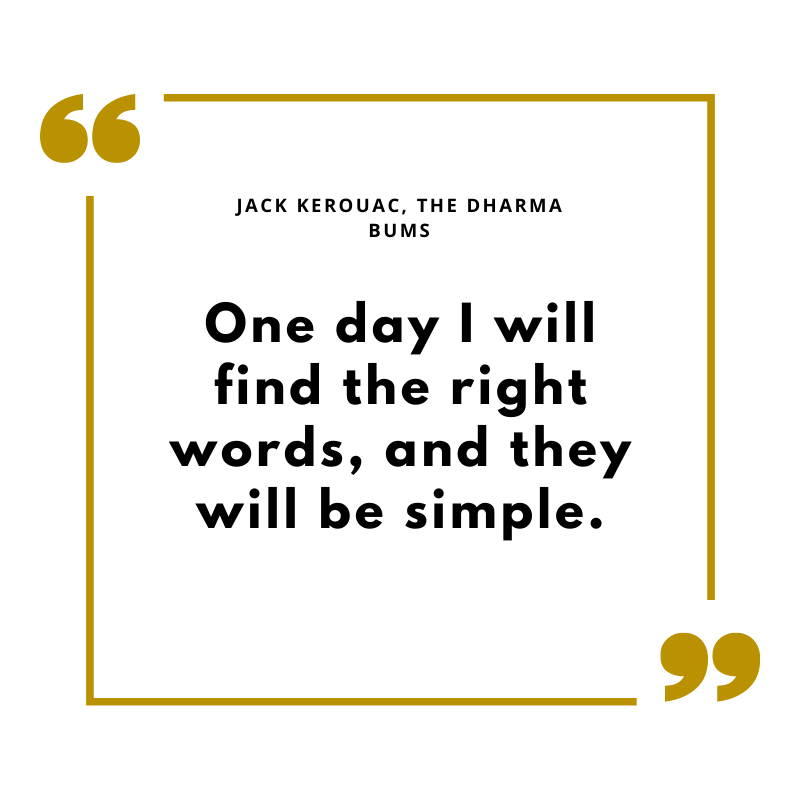
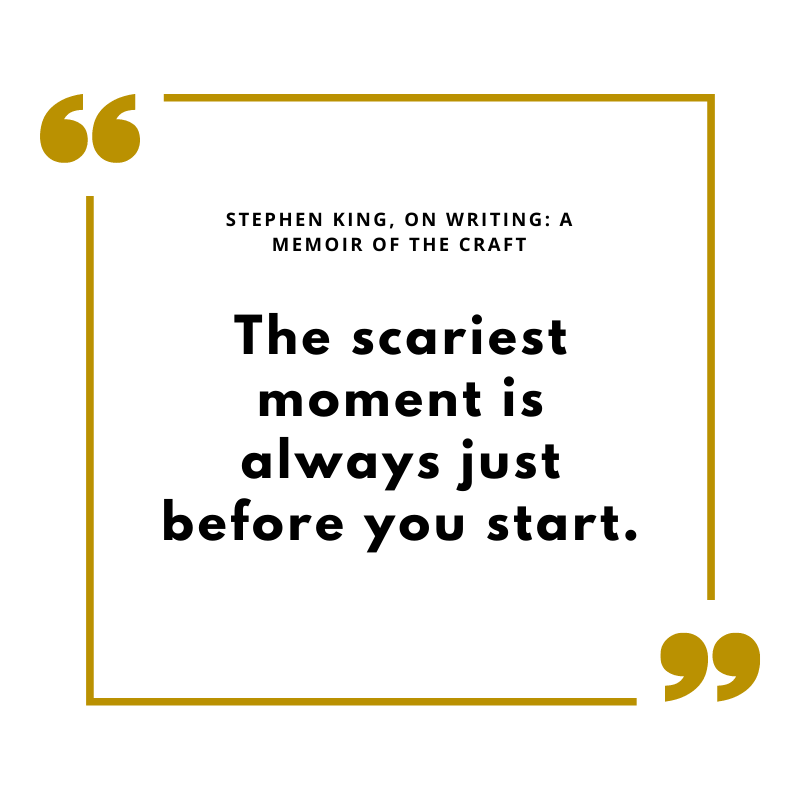
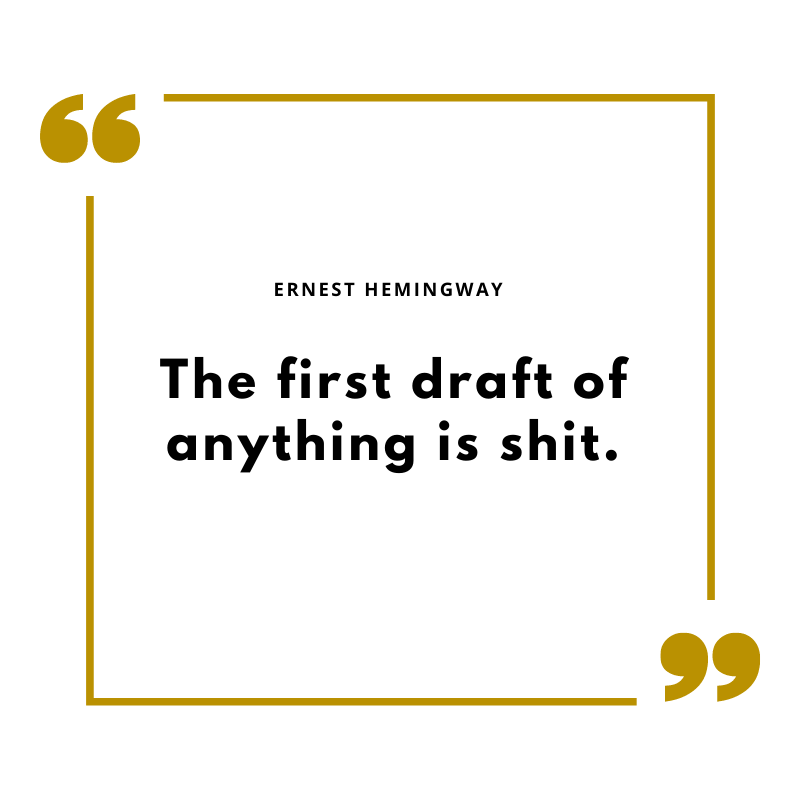
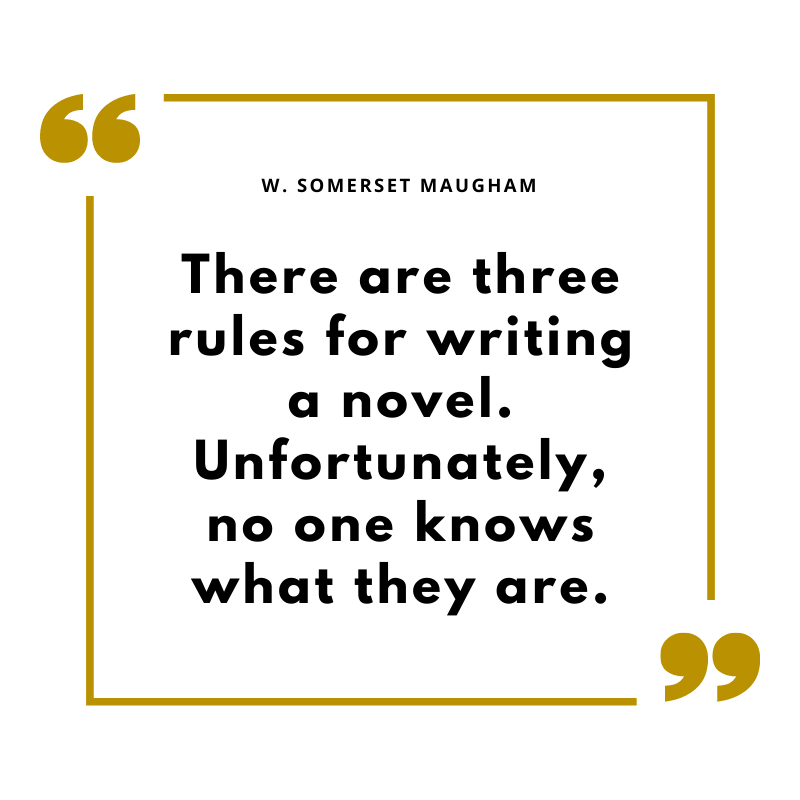
Writing can be a double-edged sword. On the one hand, it’s exciting to create new worlds and characters. On the other, there are parts that feel like pulling teeth just to get an idea down. When we’re in the depths of writing despair, it often feels like we’re alone. Surely none of those amazing published authors have these problems! Thankfully, that is not the case. In fact, many published authors go through the same trials as you when writing. Writers have a few words about writing that are very relatable. I’ve compiled thirteen that I’ve found especially relatable.

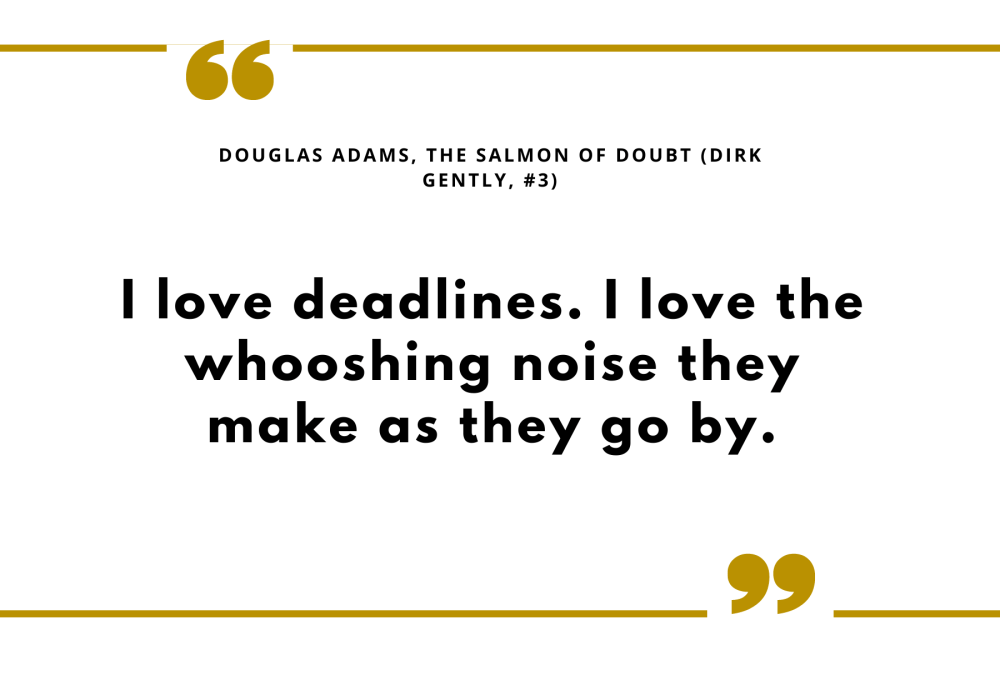
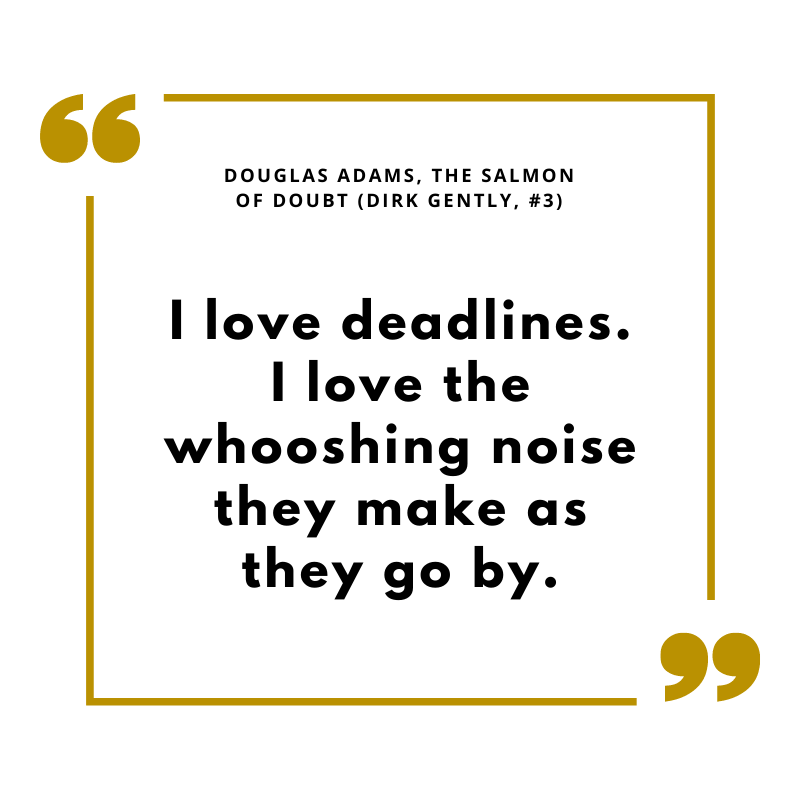
  1. This quote about deadlines that is too real.
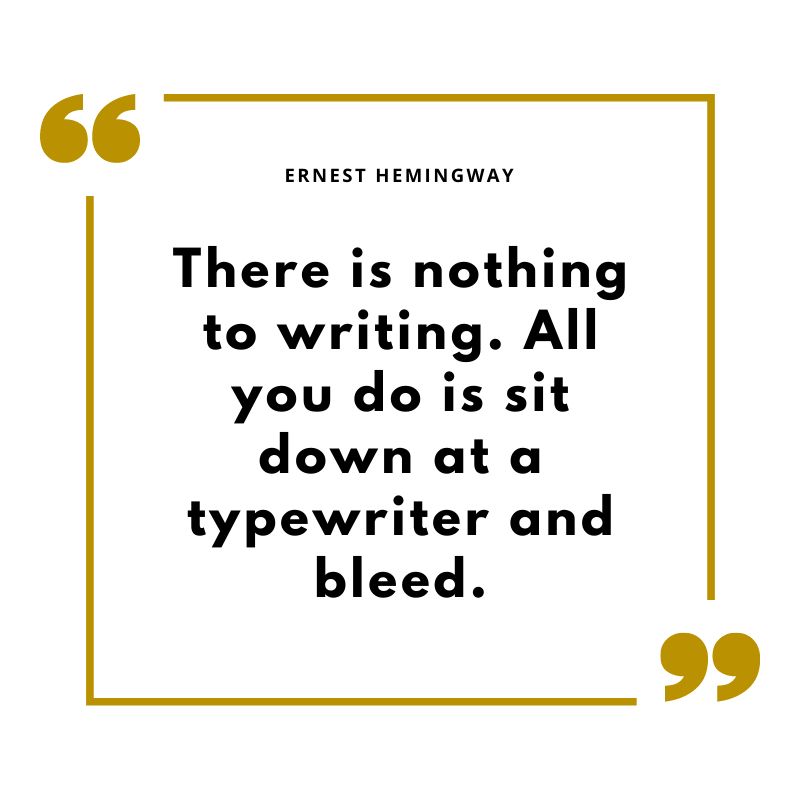
  1. Ernest shows up a lot on this list, because he speaks the truth.
  1. True for both writing and life.
  1. This quote from Stephen King about the curse of adverbs.
  1. Again, true for both life and writing.
  1. Words of wisdom if you’re struggling with your first draft.
  1. Soothing words for anyone who feels confused about the writing process.
  1. Neil knows how we all feel at the beginning of a writing session.
  1. Dorothy understands the writing dilemma.
  1.  Perfect for the introvert in all of us.
  1. Ernest is back with more relatable words.
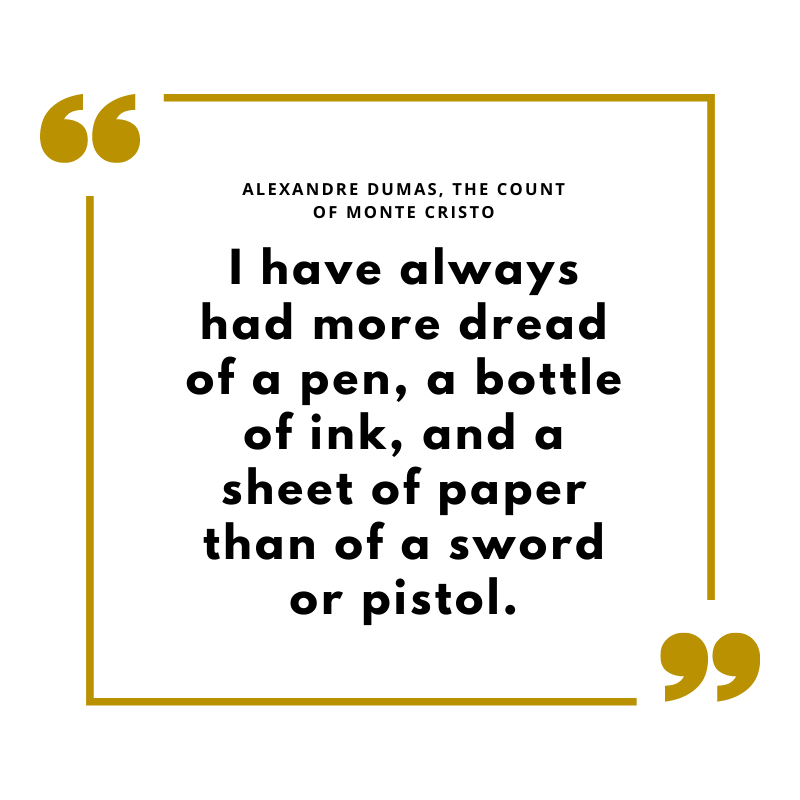
  1. A writer’s most feared weapon.
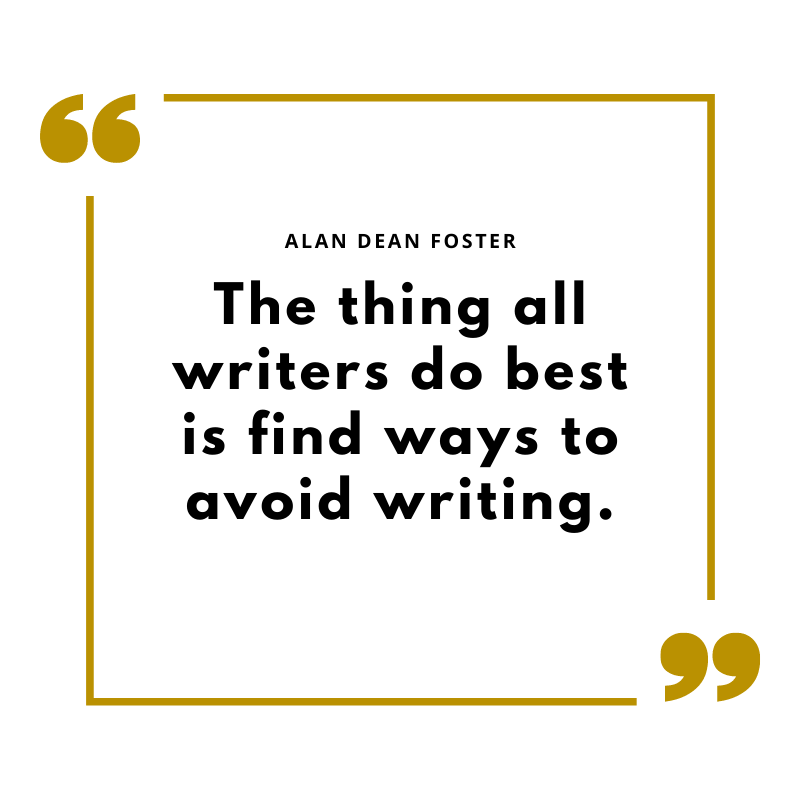
  1. Finally the most accurate quote about writing.

What was your favorite quote? Do you have a favorite quote about writing? Let me know in the comments below! I always love hearing other writer’s perspectives on writing. This will be my last writing-themed post before we enter into NaNoWriMo. I’m planning on giving it another shot this year, this time with a new genre focus. I’ll have some more information about it in my next writing post on November 3rd. In the meantime, let me know if you are participating in NaNoWriMo in the comments below. Thanks so much for reading and happy writing!

5 Tips to Creating Dynamic Characters

There are countless parts of the writing process that make you want to tear your hair out. World building? Difficult. Plot? A mountain to climb. But there is a part of writing that feels as intimidating as crafting a good twist: creating characters. Creating your characters can be as easy as throwing some traits together and calling it a day. Creating well-rounded, dynamic characters is more of a nail-biting process. You want them to jump off the page, but still feel like real people in the world you’ve created. When creating my own characters, I’ve found a few tips that have helped me make my characters more dynamic and relatable. 

  1. Research is key

For those who love starting a story blind, this may be a nerve-wracking step for you. However, research can be a useful tool when creating your characters. It’s not just for worldbuilding! If you have a bare bones idea of who you want your character to be, use those bare bones to learn more about your character. This research is very important if you are writing characters in a different time or if they are someone with a different life experience from you. If you want your character to be a suffragette in England during the 1910s, you need to research the ladies of that movement. If you want to write a character who is a part of a community that you are not, interview someone in that community to get an insight into their experiences. The information you gather isn’t something you necessarily have to replicate when creating your character. Instead, use this research as a lens to sharpen your character. It’s like the glasses of writing! 

  1. Character Sheets are (sometimes) your friend

Character sheets are either the bane or savior of a writer’s existence. They can be a great tool, but also a bit overwhelming. A character sheet is a long document where you write down many different facets of your character to help flesh them out. Everything from their favorite color to their morals is on this sheet. It’s a great tool to help you humanize your characters. It’s also a great guide for those times you get stuck writing. How would your character react to a situation? Consult your character sheet and you’ll be able to determine how their reactions will alter the plot. If you’ve tried a character sheet before and got overwhelmed, you’re not alone. I often get overwhelmed by the details you need to use to fill out the sheet. Try filling out some basic information on the sheet as a jumping off point. If you discover things later down the line about your character, you can add it to the sheet. Once you’ve finished your draft, you can use this sheet to make sure that the character’s actions are consistent.

  1. Use visual references for your characters

If you are a visual person like me, sometimes describing characters can be hard without visualizing them first. If you are someone who draws, try drawing your character using the descriptive words you already have. Adjust these descriptors as needed once you have your character drawn out. I sadly did not get the drawing gene, so I use a different approach. I call it the “movie book cast”. Think about people who you would cast in a movie version of your book. What about their appearance and body language is similar to one of your characters? Use their inspiration to help make your descriptors more concise.  

  1. Take inspiration from your own favorite characters

There are many books that inspire us to write within a certain genre. Characters do that as well. This means it’s time for one of my favorite things, a list. First, write down what you already know about your character. What are their traits, their morals, etc? Then, make a list of characters who have inspired you. Write down their attributes, and pick out a few that you think would go well with your character. It is very important that you use this as inspiration, not as a copy and paste deal. If you love Elizabeth Bennett, don’t put a new name on her and put her into your story. Instead, think of why you love Elizabeth and use these traits as inspiration to create your own character. 

  1. Don’t be afraid of flaws

When writing a story, a compelling tale is a must. How can you accomplish this with perfect characters? Newsflash, you can’t. Characters need to have flaws just like real life people. If you write a perfect protagonist going on a hero’s journey, there’s no point to the story. How will they grow if they’re perfect to begin with? This is when research and the good old character sheet come in handy. Use the information you gather from these to help determine these flaws. Are they a frustratingly perfect hero on a quest? Think about why they are going. Many times characters begin their journey for the wrong reasons, which is where the flaws begin to appear. Flaws are what make your characters relatable and interesting. It also makes your story interesting. No one cares about someone who can go through hardships without batting an eye. If you’re not sure where to begin, reference tip number four. What are the flaws of your favorite characters, and why were they present? Use them as a jumping off point to help you figure out how to humanize your own characters.

Creating a dynamic character in the world of your imagination is hard, but so worth it. Once you have them fleshed out, the story seems a little less intimidating. What is your process for creating characters? Have you ever tried these steps before, and did they help you? Let me know in the comments below! I hope that these tips can help you with character creation, especially during the upcoming NaNoWriMo. We have about a month, but it’s never too early to start planning. Thanks so much for reading, and happy writing!
10 Fall Themed Writing Prompts

It’s finally fall! Even though it’s still hot where I live, I am determined to get into the fall spirit. September is the beginning of one of my favorite seasons. A season where I want to jump headfirst into everything cozy and fall-themed. This is the season where I get out Agatha Christie and dip into the spooky section of my bookshelf. But what about my writing? How can I bring it into this cozy and mysterious world as well? Enter the magical world of writing prompts. I often forget about all the fall-centric writing ideas, so these are a great way to get into the fall mood. I’ve come up with a few prompts that are sure to get you into the spirit of fall, and get your creative juices flowing!

  1.  
  1.  
  1.  

What did you think of these prompts? Are there any fall-themed prompts that you like to reference for inspiration? Let me know in the comments below! Also, please share any stories that stem from these prompts. I’d love to see the different perspectives on these ideas, and where they take y’all. I am very excited to get started on using some of these myself. Hopefully they’ll give me some inspiration for my NaNoWriMo story. Or even ideas for a new character. Thanks so much for reading everyone, and happy writing!

3 Ways To Make Pitching your Story Less Scary

Writing is a daunting task. Anytime words flow out of a person to create a narrative, it’s a long and sometimes brutal process. During this time, it’s easy to get into your own head about your writing. I do this all the time, especially when I’m working on a new story idea. When your burrow your head deep into the text, it can be hard to pull yourself out to look at the bigger picture. If you miss a look at the big picture, you might not catch a duplicated leave with an incoherent story. To help yourself find these areas in need of fixing, it’s time to consult. It’s time to pitch your story.

Pitching sounds like an official and scary word, but it doesn’t have to be. Pitching can be everything from a well-designed presentation to a conversation. After my deep dive into NaNoWriMo and Save the Cat, I’ve grown to appreciate the pitch. I’m also in the business and advertising worlds, so I’m well aware of the benefits in that world. I was happy to see that it’s helpful for writing as well! It may seem scary, but pitching an idea doesn’t have to be nail-biting. Here are three tips to help keep decrease the nerves

  1. Pitch to someone you trust

If you are in the writing stage and need story advice, talk to someone you trust about your story. Talking it out is a great way to look at your story in a new light, and it can help you get a new perspective on some plot points. Pitching to someone you trust is super important. If you are self-conscious about your writing, like me, it’s a must. If you have a fellow writer that you trust, go to them first. They can give you more technical advice that could help take your writing to the next level. If you don’t have a writer buddy, that’s okay. A close friend outside of the writing world can still give good feedback. I usually talk to my sister, who is both a fellow writer and someone who understands my weird personality. She knows how to tell me an idea is dumb without upsetting me, and I often get new ideas for my plots when I speak to her. It’s a win-win. 

  1. Think about something you want advice on beforehand.

Before speaking to your trusted confidant, think about the issues you see already. Is a character falling flat for you? Is an added theme taking away from the story? Jot these thoughts down and ask. This is especially helpful if you have a writing confidant. Asking specific questions will help give them a starting point for discussion. This is helpful if your questions are more specific to the technical side of writing. These questions are good for non-writers as well. You might discover that something you were questioning isn’t a problem for a reader.

  1. Repeat, repeat, repeat. 

Like many things, pitching becomes less scary the more you do it. As someone who still gets nervous talking about my story idea around some people, I know how it feels. All you can do is jump in and keep going. Speak to other friends, teachers, and colleagues about your idea. Keep it casual, but make sure you hit some general points in your conversation. This is where the questions come in handy. Ask each person the same questions as a baseline. Let the conversation go from there in an organic way. This makes it easier to repeat this process and get even more results. Over time, you’ll see a decrease in your nerves and a more confident approach to receiving advice. In the long run, this is key to get more confident. If you pitch your story to an agent and a publisher, this confidence will go a long way.

Pitching is still a bit nerve-wracking for me, but I’ve found these three steps super helpful. Three years ago, I would have been nervous to share my writing with my sister. Now we toss ideas around with casual air. No nerves in sight. I have faith that you will be able to get there someday as well! What are your experiences with pitching a story? Do you have any advice on how to lessen the nerves? Let me know in the comments below! If you do end up pitching a story in the future, let me know how it goes. Go forth my fellow writers. You’ve got this! Thanks so much for reading and happy writing!

A Writer Versus Her First Draft

When I first pinned the title “writer” to my metaphorical name tag, I was a bit skeptical of its legitimacy. I’m sure that I fell under the writing bucket. But was I a writer? Does it even count if you’ve never finished something? Most of these questions sprouted every time I began a new project. Exciting at first, sure. But after a while, it looks like a bunch of drivel in black and white that I can do nothing about. This is when I want to rip my writing badge off me and stalk off to find a new creative outlet. After a few years of grumbling about it, I realized my issue. The same issue that I know other writers face. The dreaded first draft.

I have always heard that it’s okay if the first draft is not great. The point of a first draft, after all, is to get the story out of your brain and onto paper. An already difficult feat without throwing the pressure of making every line perfect. This is where my issues come in. I am what many would call a “Type A” person. Within that “Type A” personality lies good old perfectionism. It’s no surprise that this seeps into my creative side also, especially for writing. I am often side-tracked when writing a story. I want every detail to be perfect and fact-checked, even in the first draft. It throws me off my rhythm and makes the creation of this first draft take forever. In fact, as I am writing this, I have never completed the first draft of a novel. The pressure for it to match the caliber of some of my favorite novels is immense. Enough for me to put my tail between my legs and throw out another prospective story.

Believe it or not, I know that this is an idiotic thing to do. It’s scary to write yes, but why would I ever think that my favorite stories were perfect in their first form? To be honest, I’m not sure. It could be something I heard in English class. Or I never let go of my childlike wonder of books. Younger Emily always imagined that Rick Riordan created well-crafted stories without any editing. I have a tendency to romanticize how creative things get made, especially novels. It took awhile for me to move from the perspective of a reader to the author peering at the creation process. One of the reasons I started this blog was to give myself more motivation to do that. If I challenge myself to talk about writing every-other week, that will help me when I sit down with a story! Right?

So far, this strategy has not played out. Outside sources like COVID and life “adventures” have made it hard for me to sit down and write outside of this blog. I’m not sure if this blog or my studies of writing will help me inch up the first draft mountain. But this uncertainty will not prevent me from taking NaNoWriMo 2020 head on! I already decided at the end of last year’s challenge that I will push myself even more this year. Who knows, I may even hit a new personal record! If you’re in the same struggle boat as me, try taking on a challenge like NaNoWriMo. I’ve gotten much more confident in my skills in the two years that I’ve tried to complete it. Each year I get a drive to do better, and even hit that crazy word count goal. If I do, then I can finally say I’ve written a first draft. 

What are your thoughts on first drafts? Do you have any advice on how to deal with the frustrations that come with them? Let me know in the comments down below! I appreciate any time y’all respond and give me advice. It’s helped me so much with this blog, and with my writing! I can’t wait to see what y’all say.  Also, please share any stories you have about the draft-writing process! I’d love to hear how y’all climbed up the first-draft mountain. Thanks so much for reading, and happy writing!

A Journalism Major in a Poetry Class

There are so many different ways to write. But sometimes it’s easy to forget the complexities of these different writing types.  When I started college, my writing experience wasn’t the vastest. It consisted of MLA formatted essays and the beginnings of stories left unfinished. I didn’t step out into the wide writing world until college. I learned APA, how to write press releases, and after a while, poetry writing. In a move that was both scary and exciting, I managed to weasel my way into an English major’s class as a Journalism major. I had pitched it to my advisor as a great way for me to hone my writing skills in case I wanted to be a copywriter. Whatever it takes right? 

Before I took this class, I had mildly ventured out into the world of poetry. When an emotion became too vivid, it was somehow easier for me to channel into poetry than anything else. I even got a few published in my university’s publication. But I didn’t consider myself enough to be a poet. The world of poetry is vast and intimidating, especially for a girl who doesn’t consider herself a writer. Because my poetry wasn’t deep or full of clever author choices, it didn’t feel good enough. Needless to say, my imposter syndrome was pretty high when I walked into my poetry class. 

Thankfully, my professor was encouraging and not at all condescending towards my writing. Which was a blessing to me, because my writing felt juvenile compared to some of the works we were reading. During that time, we kept a journal and had the task of writing a few poems in it a week. As the semester progressed, I felt less perturbed by the blank page when it was time to write. In fact, I sometimes found myself jotting down an idea on my phone to write in the journal later. It was so exciting to feel the current of creativity flowing out of me. Even if my writing wasn’t as “sophisticated” as my classmates’, I was happy with what I had. 

I found that my PR classes helped a lot with my writing instead of hindering it. In a press release, you have to include as much information as possible within a limited word count. Because of this, you have to be strategic when choosing your words. I found this also true when I was writing poetry for class. When you craft a poem, each word you choose matters. It was challenging, but also comforting in its familiarity. I channeled the wisdom I learned from my JMC classes to help me, especially when I was editing my poetry. 

Taking a poetry class also helped my writing skills in my JMC classes. This class allowed me to explore a new writing style that was actually super helpful in my JMC classes. During the time of my poetry class, I was working on a campaign for an advertising competition with my class. The writing experience I got in my poetry class helped me edit the copy for the ads we were pitching. I  discovered that it also helped with my brainstorming process. I guess they both pull from the same pool of creativity! 

In the end, I found my experience in my poetry class to be a big help to my writing and creativity. What about y’all? Have you ever taken a poetry class, and what was the experience like? How did it help out in other parts of your life? Let me know in the comments below! Thanks so much for reading, and happy writing everyone!

Why I love Fairy Tale Adaptations

Did the title of this blog post give you déjà vu? If so, then you know that I’ve already nerded out once before about adaptations. What can I say, they’re a fun genre that I can’t resist.  But I’ve scratched the smallest surface of the genre. Last time, I spun a tale of my history with mythology adaptations. Today, it’s time to jump back down the adaptation rabbit hole. I wanted to nerd out over my first literary adaptation love: fairytale adaptations. 

Like many kids, I grew up reading fairy tales. My personal favorites were Grimm’s fairy tales. I loved the countless little stories about animals, heroes, and magical creatures. My childhood book of fairy tales had a worn spine by the time my sister and I got older. Even as a 25-year-old, I still have a book full of the complete Grimm’s fairy tales. But I did go through a phase where the traditional fairy tales seemed a bit stale. Sure, I loved the classics, but there are so many times that you can reread The Golden Goose. During that time, I began to notice a lot of fairytale adaptations entering the reading scene. There was Y.A. rom-com adaptations, more adult takes, and the classic “dark-retelling” of some classic tales. 

One of the first adaptations I remember reading was Cinderellis and the Glass Hill by Gail Carson Levine. It was a fun twist on the story of Cinderella, with some elements of other stories sprinkled in with a bit of humor. Levine has done many other fairytale adaptations, like Ella Enchanted and Fairest. Her versions of these classic tales made me interested in the art of storytelling. When I was older, books like Geek Charming introduced me to a fun and quirky way to retell some of my favorite fairy tales. 

Reading these stories excited me because of the creativity involved. Sure, these stories aren’t new, but it’s so fun to see where the twist comes in. Sometimes it’s witty humor or a deep sense of world-building.  Or it could be genderbent characters and modern settings. These elements give fresh life to the stories, and even expand on some parts of the original tales.   You could read the banter of characters interacting who are from different stories. Or you could enjoy a steampunk version of a classic story. The possibilities are endless!

One day, I want to write my own fairy tale adaptation with a twist. In the meantime, I’m delving into interesting fairy tales from many different cultures. It’s so fun to learn about the folklore of these parts of the world. I also love seeing how iconic stories translate in different cultures. What is your favorite fairy tale that you’d love to see adapted in some way? What’s your favorite fairy tale adaptation? Let me know in the comments below! I’m excited to hear your thoughts, and hopefully learn about some new tales. Happy reading everyone!